
What first interested you in surveying and engineering?
As an architect, I came to surveying and engineering from the other side of the table. I spent decades relying on existing-conditions information to make design decisions, and I saw firsthand how much time and effort could be lost when that information was incomplete or unreliable. I became fascinated by the opportunity to document buildings with far greater accuracy—and, more importantly, to turn that information into something architects, engineers, owners, and operators could actually use.
About 25 years ago, we encountered laser scanning when the technology was still in its infancy. The equipment was clunky and slow, and the software interfaces were even more challenging. But the potential was unmistakable. We invested in the technology and delivered a number of successful prototype projects that gave us an early glimpse of what reality capture could become.
It has been exciting to watch the hardware and software advance so dramatically—and to see market awareness grow to the point that reality capture is becoming a standard part of the industry. It’s even more exciting to have been involved from those early days and to continue playing a part in that transformation.
What made you want to start Prologue Hospitality?
It really grew out of seeing a recurring problem in my architectural work. We were being asked to make significant decisions about existing buildings without always having a reliable record of what was actually there.
Hospitality made that problem especially interesting. Hotels are complex buildings that are constantly evolving, and renovations happen repeatedly over their lives. Yet the information needed to plan those projects is often scattered, outdated, or simply unavailable. Prologue grew from the idea that there had to be a better way to create and maintain that record.
Since then, we’ve been excited to dig deeply into the needs of hospitality clients of all types and to develop highly specialized processes around them. The more we’ve learned about how hotels are owned, operated, renovated, and repositioned, the more opportunities we’ve found to tailor our work — not simply to document a property, but to deliver the right information, in the right form, to support the decisions our clients need to make.
What do you think sets hospitality projects apart from other industries?
Hotels are living environments. They are buildings, businesses, workplaces, and guest experiences all at once.
That means our work has to be technically rigorous while also being remarkably unobtrusive. We may need to document hundreds of guestrooms and complicated back-of-house spaces without interfering with guests or operations. Success isn’t simply capturing the building accurately. It’s doing it in a way that respects the fact that the hotel never stops being a hotel.
What problem did you want Prologue to solve?
Fundamentally, trust in existing building information.
There is no shortage of data today. The harder problem is knowing whether the information you have is accurate, current, organized, and useful. We wanted to give owners and their teams a reliable source of truth about their buildings, information they can find, understand, and confidently use when a decision needs to be made.
What’s one thing you’ve learned after more than two decades in the industry?
The quality of the information at the beginning of a project has an enormous influence on everything that follows.
Good decisions depend on good information. Investing the time to understand a building properly at the outset can prevent an extraordinary amount of wasted effort, redesign, uncertainty, and cost later.
What’s one industry belief you disagree with?
That more data is necessarily better.
Technology now allows us to collect extraordinary amounts of information about a building. But collecting data isn’t the same thing as creating knowledge. The real value comes from determining what information matters, organizing it intelligently, and making it accessible to the people who need it.
A point cloud can capture reality with remarkable precision. A useful building record requires judgment.
What matters most to you when working with a client?
Understanding what they are actually trying to accomplish.
It’s easy to become focused on the immediate deliverable — a scan, a model, a set of drawings. But the more important question is what decisions that information needs to support. If we understand that, we can create something that is useful not only for today’s project but potentially for many projects and decisions to come.
And, of course, trust matters enormously. I want our clients to know that when Prologue says something is accurate and complete, they can rely on it.
How would you describe your leadership style?
Collaborative and curious, with high expectations.
I’ve always believed that good ideas can come from anywhere, so I try to create an environment where people are comfortable questioning assumptions and proposing better ways of doing things. At the same time, I care deeply about the quality of what we produce. I think you can give talented people considerable freedom while still holding a very high bar for the work.
What are you most proud of building at Prologue?
I’m most proud that we’re building something larger than a scanning service.
The technology is exciting, but it isn’t ultimately the point. We’re developing the expertise, processes, and systems to create a trustworthy digital record of a property, and eventually an entire portfolio. That information can serve owners, operators, architects, and engineers repeatedly over the life of a building.
I’m also proud that we’ve developed a team that understands both sides of the equation: the precision the work requires and the realities of working inside an operating hotel.
What’s one principle you try to carry into everything you do?
Be humble and curious enough to understand the real problem before trying to solve it.
That applies to architecture, technology, business, and relationships with clients. The obvious problem isn’t always the important one. Taking the time to ask better questions always leads to better work.
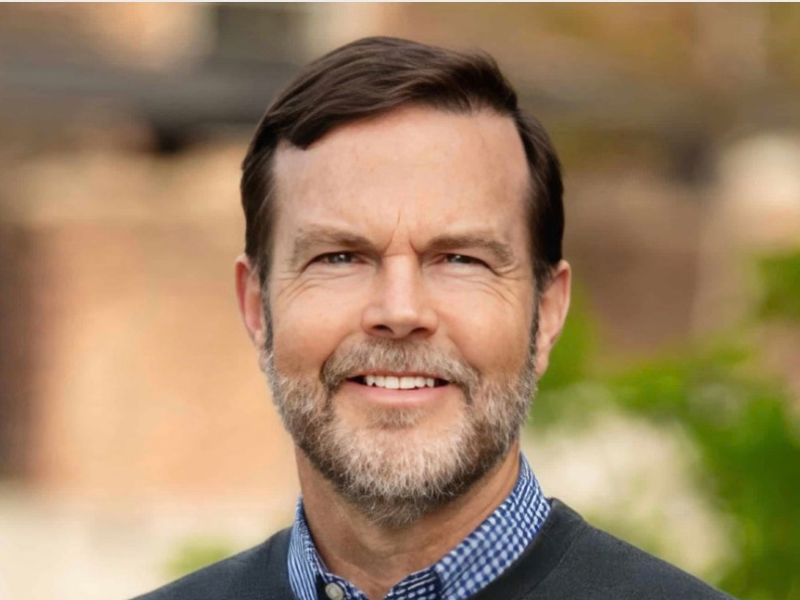
FOUNDER
Jay Hugo